First Free Analysis - SpaceX and the "IS" Истребитель спутников Legacy
"Beware of Greeks bearings gifts," warns Virgil in the Aeneid. Likewise, those offering "free shares of stock" should raise an eyebrow: why would the foremost predators of my civilization offer upside, gratis, to every child in America (at latest estimate, it was 2 million shares to be gifted to children's "Trump Accounts")?
Surely, one could argue that some level of "universal enrichment" would enable the sunset of Social Security and other defined-benefit entitlements that encumber government finance - but there are innumerable other options and assets classes from which to choose for collateralizing the otherwise generally impoverished American citizen. For example, would not shares of Cheniere Energy, the amazingly profitable LNG exporter, prove more lucrative over the next ten years?
Cheniere Energy vs. SpaceX: de-risked vs. at-risk investments
Shares of Cheniere Energy would surely prove a more concrete and certain inheritance for one's children than SpaceX - conservatively, the US will be export LNG at great profit for the next decade, and thus owning these shares would provide a bankable windfall for one's progeny - a suitable inheritance, indeed!
The difference between Cheniere Energy and SpaceX comes down to a simple question of sovereignty: the power of the US Navy, combined with international allies and established laws of the sea, underwrites the ability of Cheniere Energy to reliably and affordably deliver LNG to customers. No nation credibly dares to menace the US' LNG exports, let alone contest the US' right to export LNG, anywhere in the world.
On the contrary, there remains no international consensus or even established norms for how to extract resources from space and distribute access to space: surely, there are accords and theories, but should it become common practice to "mine" space and use it for industrial development, under the existing international governance for space resources, conflict becomes inevitable.
The Trump-promoted Artemis Accord to govern the economic exploitation and use of space has two notable exceptions as signatories: Russia and China. Should conflict over space occur, these two countries would credibly block SpaceX's access to space and, surely, imperil the very existence of the company.
By "gifting" SpaceX stock to American children, the Trump administration attempts to align the incentives among the common people for a possibly costly confrontation over the "final frontier": without support of the common people, the Trump or a future administration has no mandate for a space war or further financing and expansion of the "Space Force", but without a well-funded "Space Force" and the mandate to use it, the SpaceX shares are effectively worthless.
Thus, it is not charity but simple math: a bit of dilution as a "cost of doing business".
History of the Soviet/Russian Satellite-Killer - IS aka Истребитель спутников
"Satellite killers" ("IS" using the Russian acronym) emerged during the heady cold war era, when the loss of the U2 over Russia compelled the US to pivot to spy satellites. In response, the Soviets established its "Satellite killer" initiative, and began testing by the early/mid 1960's and deployed by the the late 1960's.
Under the Nixon administration, Kissinger negotiated a halt to the Soviet "IS" program in 1972, as part of a broader nuclear weapons detente. The Soviets resumed the "IS" program only three years later, in 1975, in response to what they argued was a provocative "Space Shuttle" program which clearly could courier space weapons and satellite-killers into orbit.
With the end of the cold-war, the "IS" program, like all great Soviet ventures, lost funding by the Gorbachev era and, by the 1990's, collapsed into a shell of its former were augmented or even replaced by high-altitude fighter planes with anti-satellite missiles.
For those interested in a "deep-dive" on Soviet satellite history, I recommend visiting this fascinating blog.
Putin-Xi Alliance - the "Soviet" ILRS vs the "American" Artemis Accord
Under the Putin-Xi alliance, the joint International Lunar Research Station emerged to fuse Russian and Chinese resources and manpower to strategically counter the Trump-led Artemis Accord with the establishment of a Russian-Chinese nuclear-powered moon-base.
The ILRS also includes other "non-aligned" states such as Pakistan, Belarus, Serbia, and other historically pro-Chinese / pro-Russian states, while pro-US nations sign onto the Artemis Accord.
Russian-Chinese Nuclear Weapons in Space - "DDoS of Space"
A critical weakness of the Space Force and America's SpaceX strategy comes from the vulnerability of satellites to a simple "area denial attack" from an orbital nuclear detonation:
A nuclear detonation in LEO, where most satellites today reside, would do more than destroy satellites in the immediate line of sight. It would inject high-energy electrons into Earth’s magnetic field, creating artificial radiation belts that persist for up to a year. Most commercial-style LEO satellites, designed for the natural radiation environment, would begin failing in days or weeks. The space industry would largely ground to a halt.
 David Rothzeid and Matt Kaplan
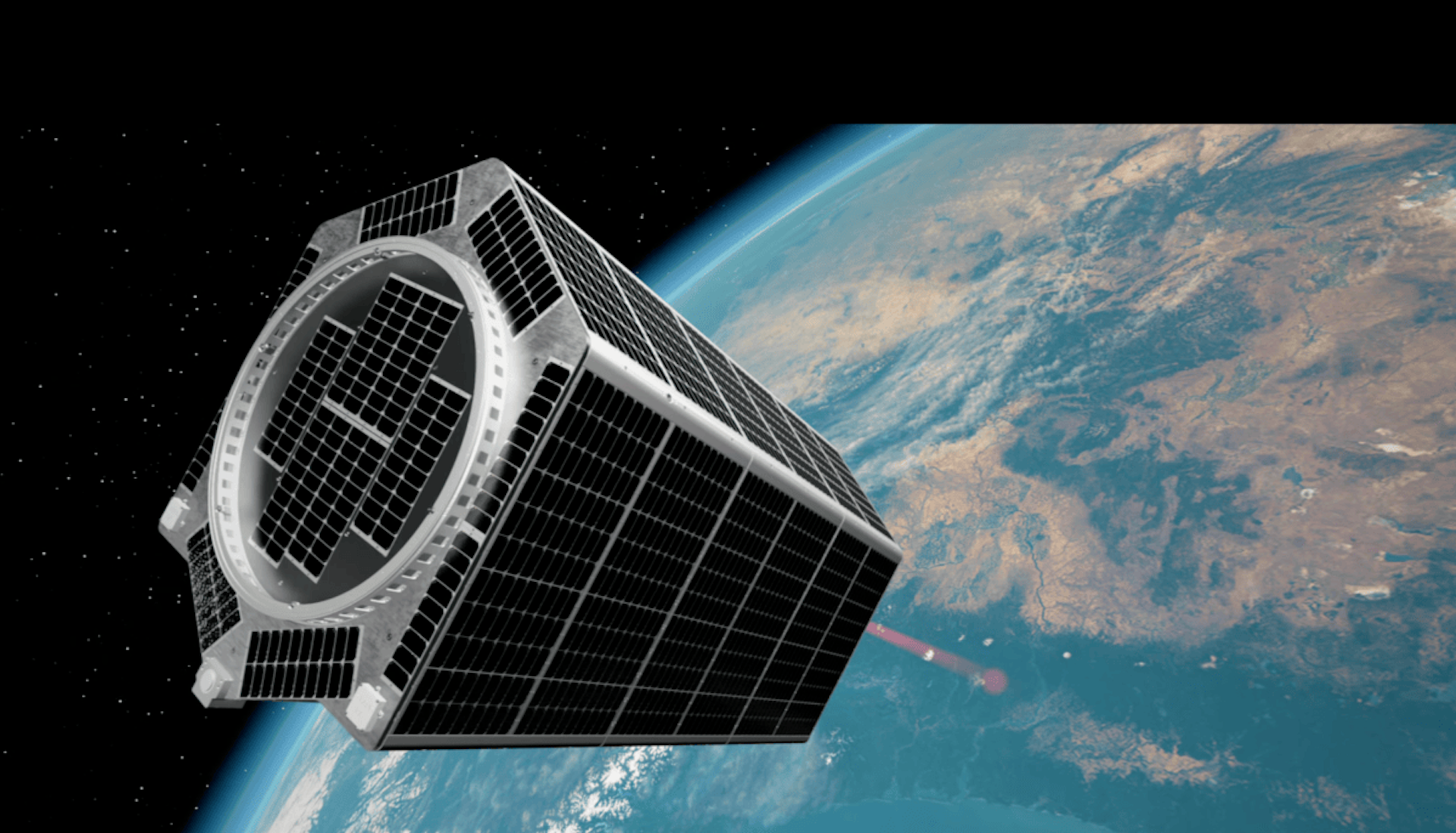
This July, the DIA reported on Russia's and China's progress on their "space denial" weapons programs. Russia notably focused on its "space denial" weapon using nuclear weapons to create destructive belts of radiation at various orbits around the Earth, making any economic extraction of space resources impossible:
Russia is developing a satellite designed to carry a nuclear weapon that could disable thousands of spacecraft and disrupt services worldwide, the U.S. Defense Intelligence Agency said. The potential damage would extend beyond military networks to commercial communications, navigation, weather monitoring and scientific operations.
If Russia can deny SpaceX access to space with a few targeted nuclear detonations in space, what are those "gifted SpaceX" shares worth, again?